
A closing force outside the range — excessively high peak or insufficient residual — indicates an assembly or adjustment defect undetectable visually. Measurement must be performed cycle by cycle, in situ.
Context and challenges
On closing mechanisms (hoods, doors, clamps, snap-fit connectors), the force generated depends on part geometry, assembly clearances, and the characteristics of return elements. A drift in these parameters results in an out-of-tolerance peak force or insufficient residual force to ensure retention. Operator feel-based control provides neither repeatability nor traceable data.
What needs to be measured
Peak force and residual force over the closing stroke, compared against compliance thresholds defined during qualification — OK/NOK result per part, with force/time curve recording.
PM Instrumentation solution
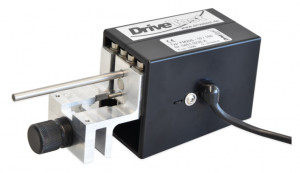
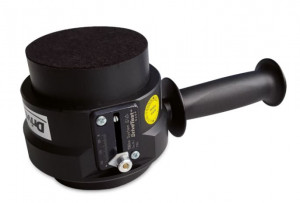
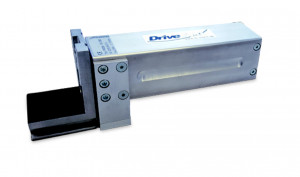
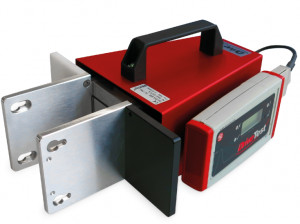
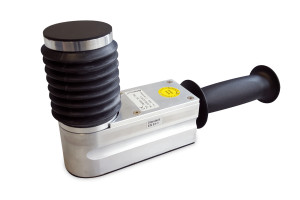
A miniature force sensor or pinch force sensor is positioned along the closing axis. The signal is acquired by a portable system synchronized with displacement. Peak force and residual force are automatically extracted; the OK/NOK result is available in real time. The architecture supports both in-line control (PLC integration, digital or analog output) and off-line audits, without modifying the mechanism under test.
Benefits
- Measurement of peak and residual force with instrumental repeatability
- Traceable OK/NOK result per part, curve recording available
- Possible PLC integration (digital / analog) for in-line control
- Portable acquisition for off-line audits and fine-tuning
- Operator-independent — eliminates variability from feel-based control
Sector: Automotive, aerospace, medical | Quantities: Closing force, residual force
 +33 1 46 91 93 32
 Contact form
 Subscribe to the newsletter